
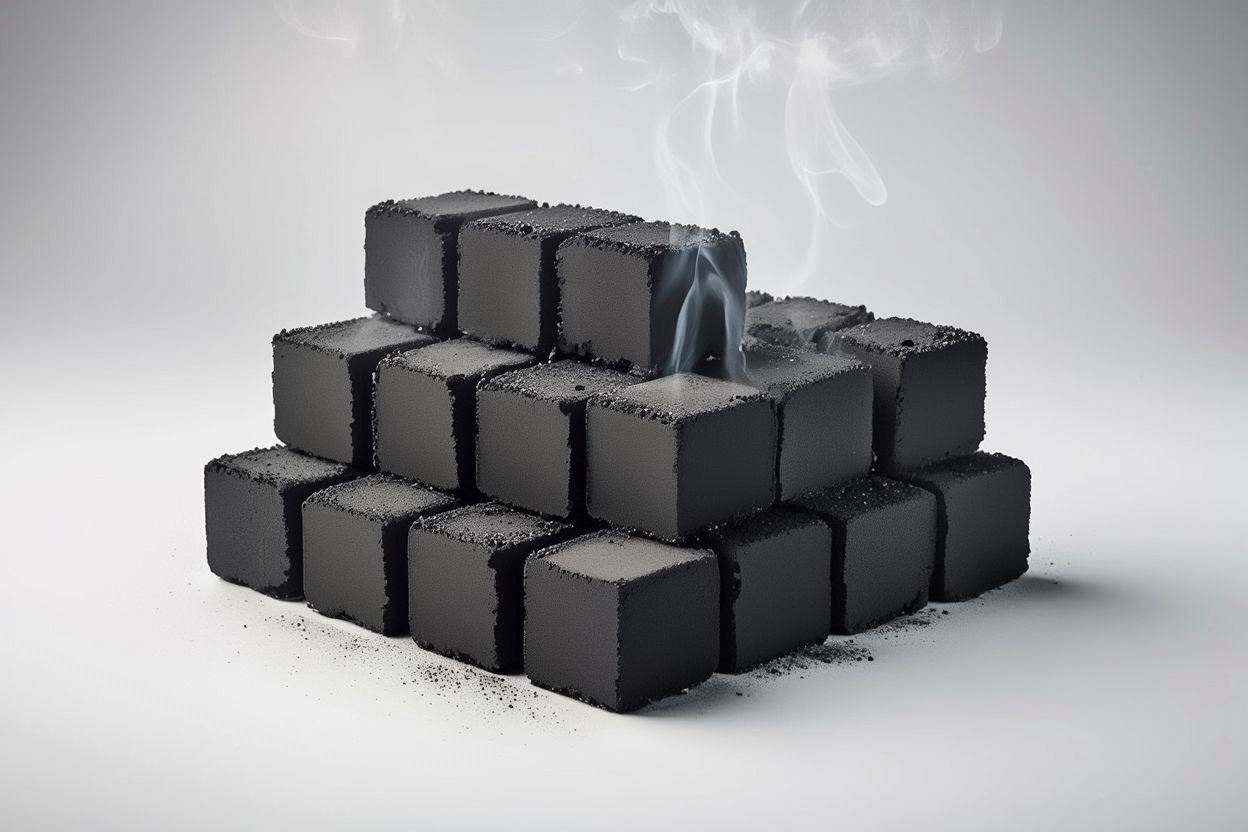
Industrial Charcoal Powder Applications for Modern Manufacturing
Industrial charcoal powder applications continue to expand across various sectors due to the material’s high carbon content, fine particle size, and versatile performance. Many industries rely on charcoal powder to support production efficiency, purification processes, and sustainable manufacturing practices.
Moreover, charcoal powder derived from coconut shells offers additional advantages. Therefore, manufacturers increasingly choose this material as an eco friendly alternative to conventional carbon based inputs.
Understanding Industrial Charcoal Powder
Industrial charcoal powder consists of finely ground carbon material produced through controlled carbonization and milling. Because of its small particle size, the powder provides a large surface area for adsorption and chemical interaction.
In addition, coconut shell based charcoal powder features low ash content and stable carbon structure. As a result, industries achieve consistent performance with minimal residue and reduced contamination risks.
Industrial Charcoal Powder Applications in Filtration Systems
One of the most common industrial charcoal powder applications appears in filtration and purification systems. Water treatment facilities use charcoal powder to remove impurities, color, odors, and residual chemicals.
Furthermore, air filtration systems apply charcoal powder to absorb gases and airborne pollutants. Because of its adsorption capacity, many facilities depend on materials derived from coconut shell charcoal powder for reliable filtration performance.
Consequently, filtration efficiency improves while operational costs remain controlled.
Use in Chemical and Pharmaceutical Industries
Chemical and pharmaceutical manufacturers also benefit from charcoal powder applications. In these industries, charcoal powder acts as a decolorizing and purifying agent during chemical processing.
Moreover, producers use it to remove unwanted byproducts and improve product clarity. Therefore, final outputs meet strict quality and safety standards.
Because purity is critical in these sectors, consistent particle size and carbon quality remain essential.
Industrial Charcoal Powder in Metallurgical Processes
Metallurgical industries utilize charcoal powder as a reducing agent in metal processing. Its high carbon content supports efficient chemical reactions during smelting and refining.
Additionally, charcoal powder helps control oxidation and improve metal purity. As a result, manufacturers achieve better material properties with lower environmental impact.
Compared to fossil based alternatives, charcoal powder offers a more sustainable solution for high temperature applications.
Role in Rubber, Plastic, and Paint Manufacturing
Industrial charcoal powder applications extend into rubber, plastic, and paint production. Manufacturers add charcoal powder to enhance color stability, durability, and resistance properties.
Furthermore, charcoal powder functions as a filler material that improves texture and consistency. Therefore, finished products maintain uniform appearance and performance.
This versatility makes charcoal powder valuable across multiple manufacturing stages.
Environmental Benefits of Charcoal Powder Applications
Sustainability remains a major advantage of charcoal powder usage. By utilizing coconut shell waste, industries reduce landfill accumulation and minimize reliance on non renewable resources.
Moreover, charcoal powder supports cleaner production processes by lowering emissions and chemical residues. As environmental regulations become stricter, industries increasingly adopt renewable carbon materials.
Consequently, charcoal powder applications align with long term sustainability goals.
Quality Control and Industrial Performance
Consistent industrial performance depends on strict quality control. For this reason, suppliers monitor moisture levels, particle size distribution, and carbon content.
As a result, industrial users receive charcoal powder that performs reliably under varying operating conditions.
Quality assurance also ensures compatibility with automated production systems and large scale industrial processes.
Conclusion
Industrial charcoal powder applications play an essential role in modern manufacturing, filtration, and processing industries. Through high adsorption capacity, versatility, and sustainable sourcing, charcoal powder supports efficient and responsible industrial operations.
For additional information on charcoal powder products and industrial solutions, visit the official homepage of Brangkas.
