
Borobudur Sailendra Dynasty History: The Story of Ancient Buddhist Power
The Borobudur Sailendra Dynasty History explains the connection between one of Indonesia’s greatest monuments and the powerful kingdom that supported its creation. Built during the 8th and 9th centuries, Borobudur represents the religious devotion, architectural skills, and cultural achievements of the Sailendra Dynasty.
The Sailendra Dynasty became one of the most influential Buddhist kingdoms in ancient Java. Their support helped Mahayana Buddhism grow and encouraged the development of monumental religious architecture.
Borobudur remains the greatest example of the dynasty’s contribution to Indonesian heritage.
The Rise of the Sailendra Dynasty in Java
The Sailendra Dynasty controlled important areas of Central Java during the eighth century. The kingdom became a center of Buddhist learning, art, and cultural development.
The rulers promoted Mahayana Buddhist traditions and supported the construction of large religious monuments. Their influence can be seen through various temples and historical structures across Java.
Borobudur was created during this period as a representation of Buddhist beliefs and royal dedication.
Visitors can discover more about this historical journey through Borobudur Temple history, origins, rediscovery, restoration, and legacy.
The Construction of Borobudur During the Sailendra Period
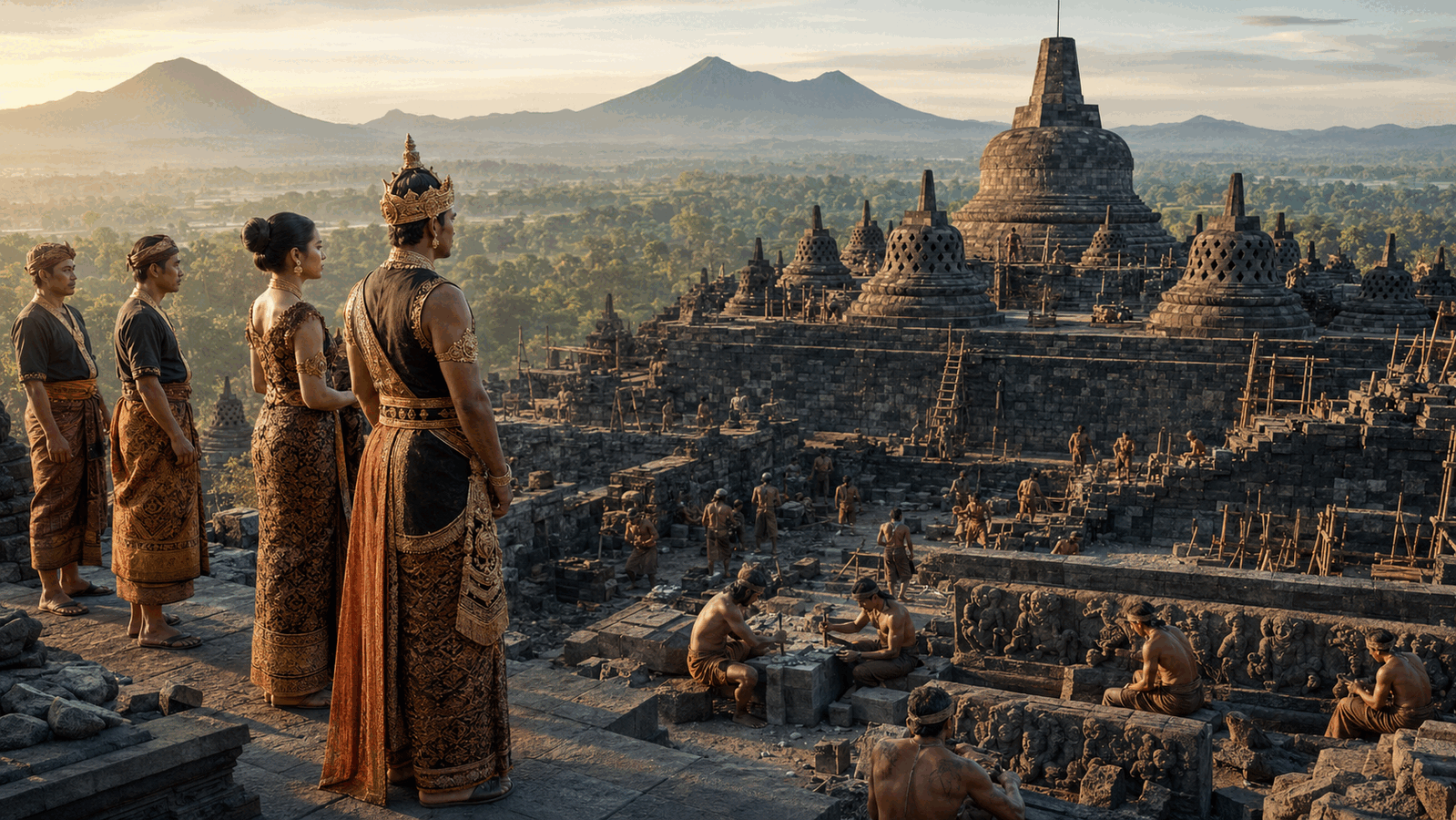
The construction of Borobudur began around the middle of the 8th century. Historians believe the project was started under Sailendra rulers who wanted to create a sacred Buddhist monument.
The builders used volcanic stone to create a massive structure with terraces, stairways, stupas, and detailed relief panels. Millions of stone blocks were arranged carefully to form the temple.
The design followed Buddhist cosmology. Borobudur was divided into three symbolic levels: Kamadhatu, Rupadhatu, and Arupadhatu.
These levels represented the spiritual journey from human desires toward enlightenment.
Mahayana Buddhism and Sailendra Influence
The Sailendra Dynasty played an important role in spreading Mahayana Buddhist traditions in Java. Borobudur reflected these teachings through its architecture and artistic details.
The temple was designed as a spiritual pathway. Pilgrims walked through the galleries while observing relief carvings that explained Buddhist stories and moral lessons.
Thousands of relief panels displayed scenes from Buddhist texts and ancient Javanese life. These carvings provide valuable information about the society that created Borobudur.
King Samaratungga and the Completion of Borobudur
King Samaratungga is often associated with the completion of Borobudur in the early 9th century. During his reign, the monument reached its final design and became an important Buddhist pilgrimage site.
The temple demonstrated the connection between royal authority and religious devotion. Its construction showed the resources, organization, and knowledge possessed by the Sailendra Dynasty.
Borobudur became a symbol of the kingdom’s cultural achievements.
The Decline of the Sailendra Dynasty
The influence of the Sailendra Dynasty gradually declined because of political changes in Java. Power shifted between different kingdoms, and religious developments also changed.
As Buddhist influence decreased, Borobudur slowly lost its original function. The temple was eventually abandoned and covered by natural materials.
For centuries, Borobudur remained hidden until its rediscovery in the 19th century.
Borobudur’s Legacy Today
Modern restoration efforts have protected Borobudur from environmental damage. The monument was recognized as a UNESCO World Heritage Site in 1991.
Today, Borobudur continues to represent the achievements of the Sailendra Dynasty. It attracts visitors who want to understand ancient Java, Buddhist philosophy, and Indonesian history.
Travelers who want to explore this historic monument can join a Borobudur Temple tour to experience its architecture and cultural significance.
Conclusion
The Borobudur Sailendra Dynasty History shows how a powerful ancient kingdom shaped one of the world’s most important Buddhist monuments. Through religious dedication and architectural innovation, the Sailendra Dynasty created a legacy that continues to inspire people today.
Understanding this history allows visitors to appreciate Borobudur as more than a temple. It represents the knowledge, spirituality, and cultural achievements of ancient Java.
