
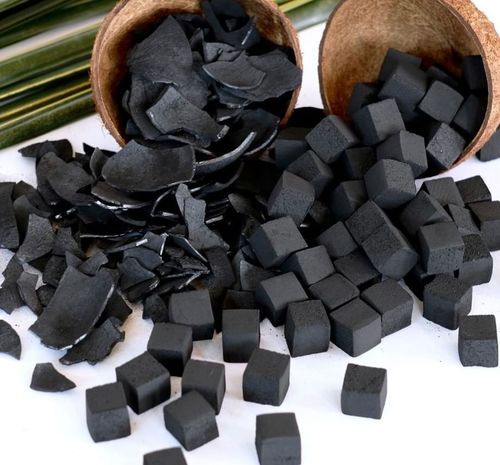
The global charcoal market analysis shows significant expansion is poised to occur, with steady growth driven by diverse industrial and recreational applications. The market volume is substantial, estimated at around 72.65 million tons in 2025, and experts project a CAGR of over 4.0% through 2030.
The increasing global population and rising energy demand continue to push the market forward. Charcoal from sustainable biomass especially coconut shells serves as a high calorific, reliable alternative fuel.
Key segments such as metallurgical industries, BBQ and shisha markets, and healthcare applications (activated carbon) shape this growth and create opportunities for specialized players.
Dominant Market Segments Driving Volume
Global consumption of coconut charcoal is significantly boosted by its versatile applications. In Recreational Cooking, the expanding shisha and BBQ markets prioritize low-smoke briquettes with stable heat output for a premium user experience. Concurrently, Industrial Applications are shifting away from coal, with sectors like iron and steel relying on charcoal as a cleaner metallurgical fuel to lower.
Furthermore, the material’s relevance extends beyond fuel, with rising Health and Filtration demand for activated charcoal in water filtration, pharmaceuticals, and cosmetics. This wide range of uses, from enhancing flavor to supporting industrial sustainability, secures charcoal’s position in diverse global markets. To explore suppliers who cater to all these diverse markets from premium shisha fuel to industrial-grade metallurgical charcoal visit jacoid.com.
Regional Dynamics and Competitive Landscape
The charcoal market displays distinct regional behaviors. Asia-Pacific dominates production and consumption, whereas Europe and the Middle East represent high-value import destinations.
Asia-Pacific Dominance and Export Power
Asia Pacific remains the largest and fastest-growing region due to strong industrial activity and dense population.
Indonesia strengthens its position as the world’s leading exporter of coconut shell briquettes, supported by massive coconut resources. The country competes actively with China, Vietnam, and Poland in the global briquette industry.
Key Importing Markets
High-value importers include:
-
Japan & South Korea demand for binchotan and high-spec briquettes for specialized cooking and industrial use.
-
Europe (Germany, UK, France) focus on sustainable, certified BBQ briquettes.
-
Middle East (Saudi Arabia) the largest consumer of shisha-grade briquettes, requiring ultra-low ash and maximum purity.
Challenges and Strategic Opportunities
Despite strong growth, the charcoal industry faces obstacles related to sustainability and raw material consistency.
Sustainability and Regulatory Pressure
Governments increasingly restrict deforestation, reducing the viability of traditional wood charcoal. These regulations accelerate the global transition toward sustainable agricultural-waste charcoal, especially coconut shell briquettes.
Logistics also challenge suppliers because charcoal often qualifies as Dangerous Goods (DG) Cargo, requiring special handling, documentation, and fluctuating freight cost management.
Effective Market Strategy
To compete in this evolving market, companies should focus on:
-
Product Quality adopting innovative briquette technology and controlled pyrolysis to achieve low ash and high fixed carbon.
-
Niche Specialization targeting premium shisha or metallurgical segments where profits are highest.
-
Traceability & Certification securing SHT, COO, MSDS, and sustainability labels to meet global buyer expectations.
Conclusion
The global charcoal market continues to expand, driven by increasing demand for premium, sustainable briquettes. Manufacturers that invest in technology, quality consistency, and sustainability gain a competitive advantage in high value export markets.
Understanding the evolving dynamics of this fragmented industry is essential for long-term profitability. For businesses aiming to capitalize on emerging trends, examining an effective strategy for selling briquettes provides practical guidance for market entry and scalable growth.